
The Absheron Peninsula Travel Guide: Flaming Mountains, Pink Lakes, and Caspian Shores
Here at www.putivnik.com, we know that while the glowing skyscrapers of Baku capture the immediate attention of most visitors, the true, rugged soul of Azerbaijan lies just beyond the city limits.
Jutting out into the wild, wind-whipped waters of the Caspian Sea like an eagle’s beak, the Absheron Peninsula is a mesmerizing landscape of geological anomalies, medieval history, and deeply rooted local culture. This is the authentic "Land of Fire." It is a place where natural gas seeps through the earth to create eternal flames, where defensive stone towers guard ancient coastal villages, and where locals retreat to sandy shores to escape the summer heat.
If you are ready to venture beyond the capital, here is your comprehensive, ultimate guide to exploring the wonders of the Absheron Peninsula.
The history of the Absheron Peninsula is inextricably linked to fire. For millennia, natural gas reserves trapped beneath the porous sandstone have found their way to the surface, creating spontaneous, eternal flames that baffled ancient travelers and gave birth to early fire-worshipping religions.
Ateshgah (The Fire Temple): Located in the settlement of Surakhani, this 17th-century pentagonal complex is an absolute must-visit. Built by Hindu and Sikh merchants who traveled the Silk Road from India, the temple was erected over a natural gas vent. The central stone pavilion once housed a naturally occurring eternal flame. Walk through the surrounding monastic cells to see incredible dioramas detailing the lives of ascetic pilgrims who believed the fire was a manifestation of the divine.
Yanar Dag (The Burning Mountain): Imagine a fire that has been burning continuously since antiquity, defying torrential rain, heavy snow, and the fierce Caspian winds. Located on a hillside near the village of Mammadli, Yanar Dag is a 10-meter-long wall of flames blazing directly out of the earth. It is a raw, hypnotic display of nature's power. Visit at dusk for the most spectacular, glowing photo opportunities.
Absheron is a hotbed of bizarre and fascinating geological phenomena. You don't need to travel far to feel like you've landed on another planet.
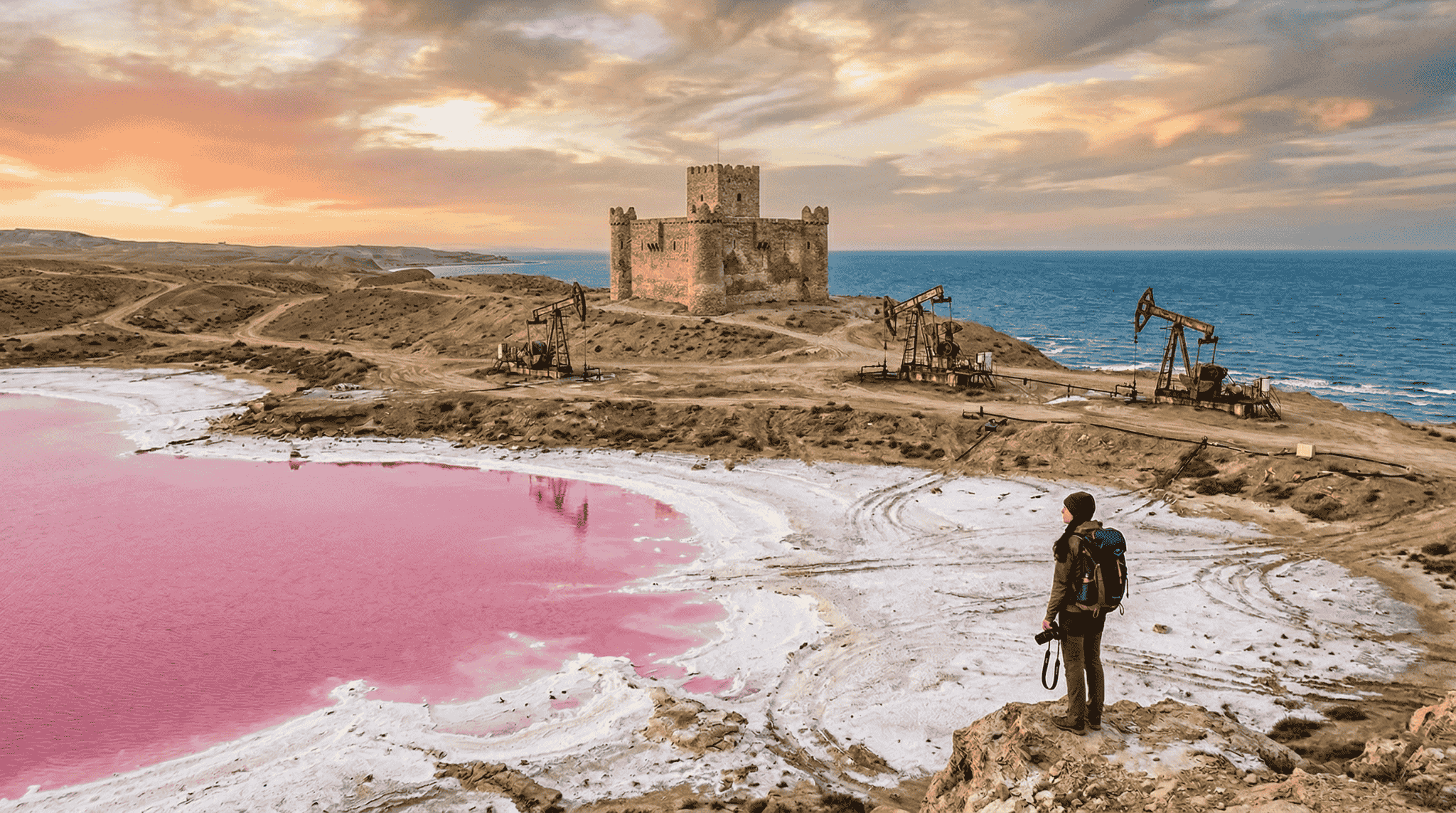
Lake Masazir (Masazirgol): Just a short drive north of Baku lies one of the peninsula's most surreal sights a vibrant, bubblegum-pink salt lake. The distinct color comes from high concentrations of chloride and sulfate, along with unique microorganisms that thrive in the salty environment. The lake is especially brilliant during the warmer summer months when the water evaporates and leaves behind shimmering, rose-tinted salt crusts.
Local Mud Volcanoes (Keyraki & Lokbatan): While the famous Gobustan gets all the hype, the Absheron Peninsula itself is dotted with active mud volcanoes. Keyraki and Lokbatan are fantastic, off-the-beaten-path alternatives. Instead of magma, these conical mounds erupt with cold, thick, mineral-rich mud.
In the 12th century, the ruling Shirvanshahs realized that the wealthy Absheron Peninsula was vulnerable to attacks from the sea. To protect their territory, they built a sophisticated network of fortresses and watchtowers, many of which still stand proudly today.
The Castles of Mardakan: The town of Mardakan is home to two formidable fortresses. The Quadrangular Castle boasts a massive 22-meter keep that you can climb for sweeping views of the surrounding oil fields and sea. Nearby, the Round Tower offers a glimpse into the medieval military architecture of the Caucasus.
Ramana Fortress: Perched on a dramatic, rocky outcropping amidst a landscape of nodding oil donkeys (pumpjacks), this white-stone, 16th-century fortress is incredibly photogenic. The contrast between the ancient castle and the industrial oil fields perfectly encapsulates the story of Absheron.
Nardaran Fortress: Located in a deeply traditional fishing village on the northern coast, this 14th-century circular tower served as both a defensive stronghold and a spiritual retreat for local elites.
To truly understand Absheron, you have to understand the local dacha (summer house) culture. From May to September, Baku residents flock to the peninsula to escape the urban heat, enjoying the sea breeze, tending to gardens, and drinking endless cups of tea.
Bilgah and Sea Breeze: The northern coast is the playground of the glamorous. Here, you'll find luxurious resorts, manicured beach clubs, and pristine pools right on the Caspian shore. It's the perfect spot to rent a cabana, order a cocktail, and enjoy world-class DJ sets.
Pirshagi and Zagulba: For a more authentic, laid-back experience, head to the public beaches. Rent a simple plastic table under an awning directly on the sand. You can order a samovar of tea, eat freshly sliced watermelon, and watch families play in the gentle surf while old men fiercely debate over games of backgammon.
The dry, sandy soil and fierce winds of Absheron might not look hospitable, but they produce some of the most uniquely flavored agricultural products in the region.
Absheron Saffron: The village of Bilgah is famous across the Middle East for producing incredibly high-quality saffron. This "red gold" is a staple in traditional Azerbaijani plov (rice pilaf).
White Cherries and Figs: The peninsula's orchards produce legendary fruits. You will find them served not just fresh, but preserved as thick, syrupy jams meant to be eaten alongside black tea.
Corat Qutabu: You cannot leave Absheron without visiting the coastal village of Corat to eat their famous qutab. Unlike the flat, crepe-like qutabs of Baku, the Corat version is thicker, shaped like a half-moon, baked in a traditional clay oven, and stuffed with rich, savory minced meat (traditionally camel, though lamb and beef are common today).
To ensure your trip is seamless, the team at www.putivnik.com
has compiled this quick-reference guide for the peninsula:
Category
Traveler Details
How to Get Around
The most convenient way to see Absheron is by hiring a private driver or using ride-hailing apps (Bolt/Uber) for point-to-point transfers. For a local experience, the Baku Suburban Railway is a cheap, modern, air-conditioned train connecting coastal towns.
What to Pack
The Absheron winds (Khazri from the north, Gilavar from the south) are famous. Always pack a windbreaker, even in the summer, and bring a hat that secures tightly!
Time Needed
You can see the main highlights (Ateshgah, Yanar Dag, a castle) in a half-day. However, we recommend a full day to include a beach trip and a long, leisurely seafood lunch.
Best Time to Visit
Late May through September is ideal if you want to enjoy the beach culture and the famous Absheron figs.
The Absheron Peninsula is a land of raw contrasts, where ancient history and geological oddities sit side-by-side with modern coastal luxury. It is a destination that rewards curious travelers willing to look beyond the city limits. Bookmark www.putivnik.com
for more insider travel guides, curated itineraries, and expert tips to make your Caucasus adventure truly unforgettable.