1 tour available
For decades, the majestic mountains, deep gorges, and sprawling valleys of the Karabakh region were veiled in conflict, effectively rendering this stunning enclave in the South Caucasus a restricted zone off-limits to international explorers. Fast forward to 2026, and the narrative has shifted dramatically. As part of Azerbaijan’s extensive "Great Return" infrastructure program, the region is rapidly opening its doors to the world, transforming from a heavily scarred landscape into an ambitious, forward-looking hub of tourism, culture, and natural beauty.
Visiting Karabakh today is entirely different from a standard European weekend getaway. It is a profound, poignant journey into history, resilience, and monumental rebirth. From the soaring altitudes of Shusha to the sobering, rapidly developing plains of Aghdam, this region offers an experience that caters to intrepid travelers, history buffs, and nature enthusiasts alike. Here is everything you need to know about navigating, experiencing, and understanding the Karabakh region in 2026.
Traveling to a newly liberated and reconstructing territory requires a bit of logistical footwork. The era of closed borders is ending, but access is still carefully managed to ensure visitor safety. The process has been heavily streamlined for tourists, making independent and group travel highly feasible.
The "Yolumuz Qarabağa" Portal: You cannot simply drive into Karabakh on a whim. Access is legally managed via a dedicated electronic permission system. To apply, you will need to secure a local Azerbaijani mobile number (providers like Azercell work flawlessly throughout the country) and the license plate of your rental car, which must be registered in Azerbaijan.
Applying for Access: Once you have your local number and vehicle details, log onto the Yolumuz Qarabağa portal. You will need to input your passport details and select the specific districts you wish to visit (such as Shusha, Aghdam, Fuzuli, or Lachin). You then select your entry date, which grants you a comfortable 5-day window to explore the approved areas.
Checkpoints and Navigation: As you drive toward the region, expect a visible police and military presence. Do not let this intimidate you; the checkpoints are a standard safety measure. Officers will quickly scan your license plate and check your passport before waving you through.
A Note on GPS: Navigating the region requires patience. Because massive infrastructural overhauls are occurring daily, apps like Google Maps can be highly unreliable. Waze tends to be slightly more accurate, but your best bet is to strictly follow the newly paved main arteries, such as the magnificent Zəfər Yolu (Victory Road), and rely on physical road signs.
Sitting dramatically at an elevation of 1,400 to 1,800 meters, Shusha is the undisputed cultural and historical heart of Karabakh. Historically known as the conservatory of the Caucasus due to its rich musical and poetic heritage, this mountain fortress city is actively reclaiming its title through meticulous, sweeping restorations.
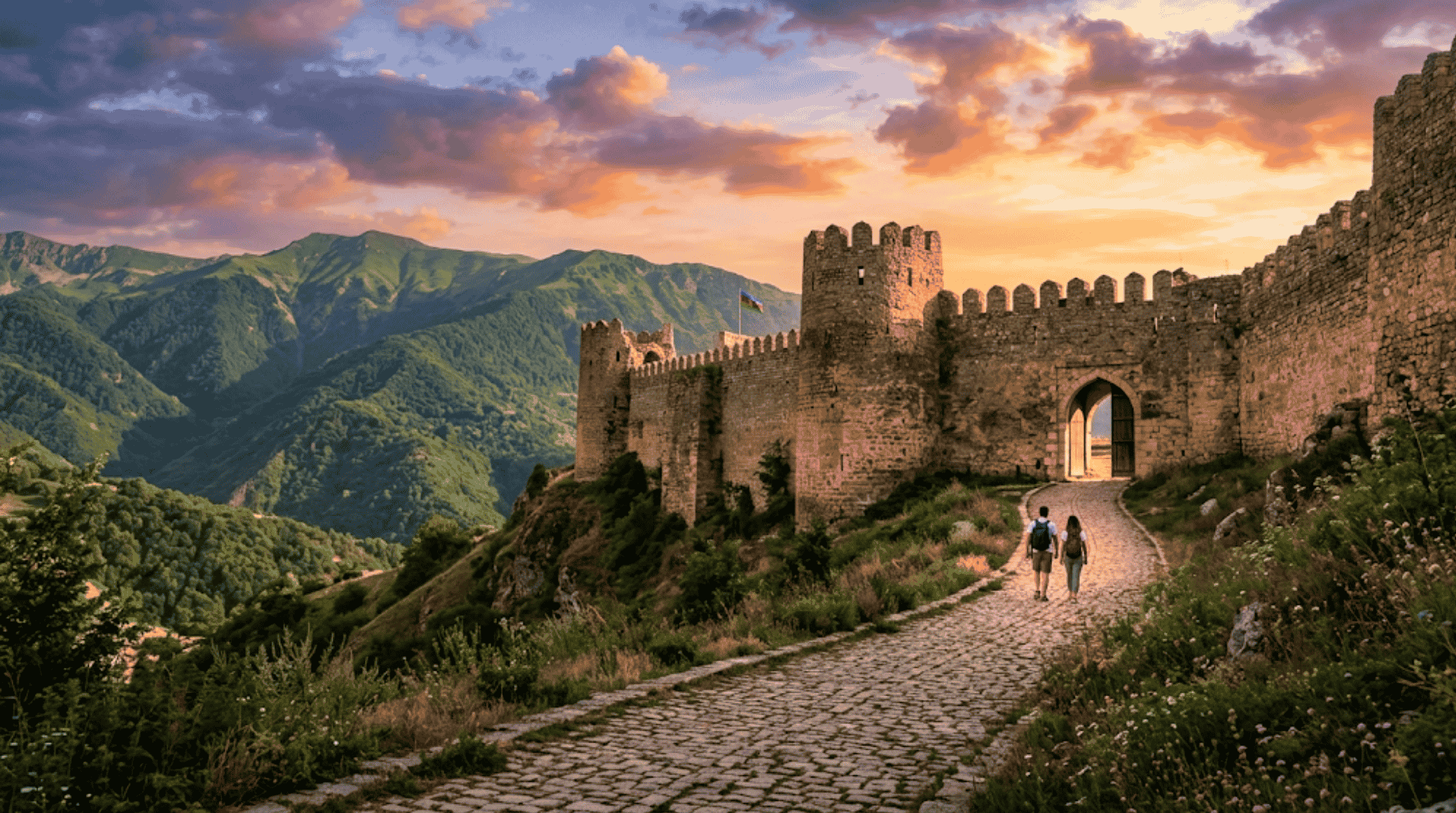
Shusha Fortress: Built in 1752 by Panah Ali Khan, the sweeping stone walls of this fortress protected the city from foreign invaders for centuries. The imposing Ganja Gate, perfectly restored, serves as the main entrance to the historic center and provides a stunning photo opportunity.
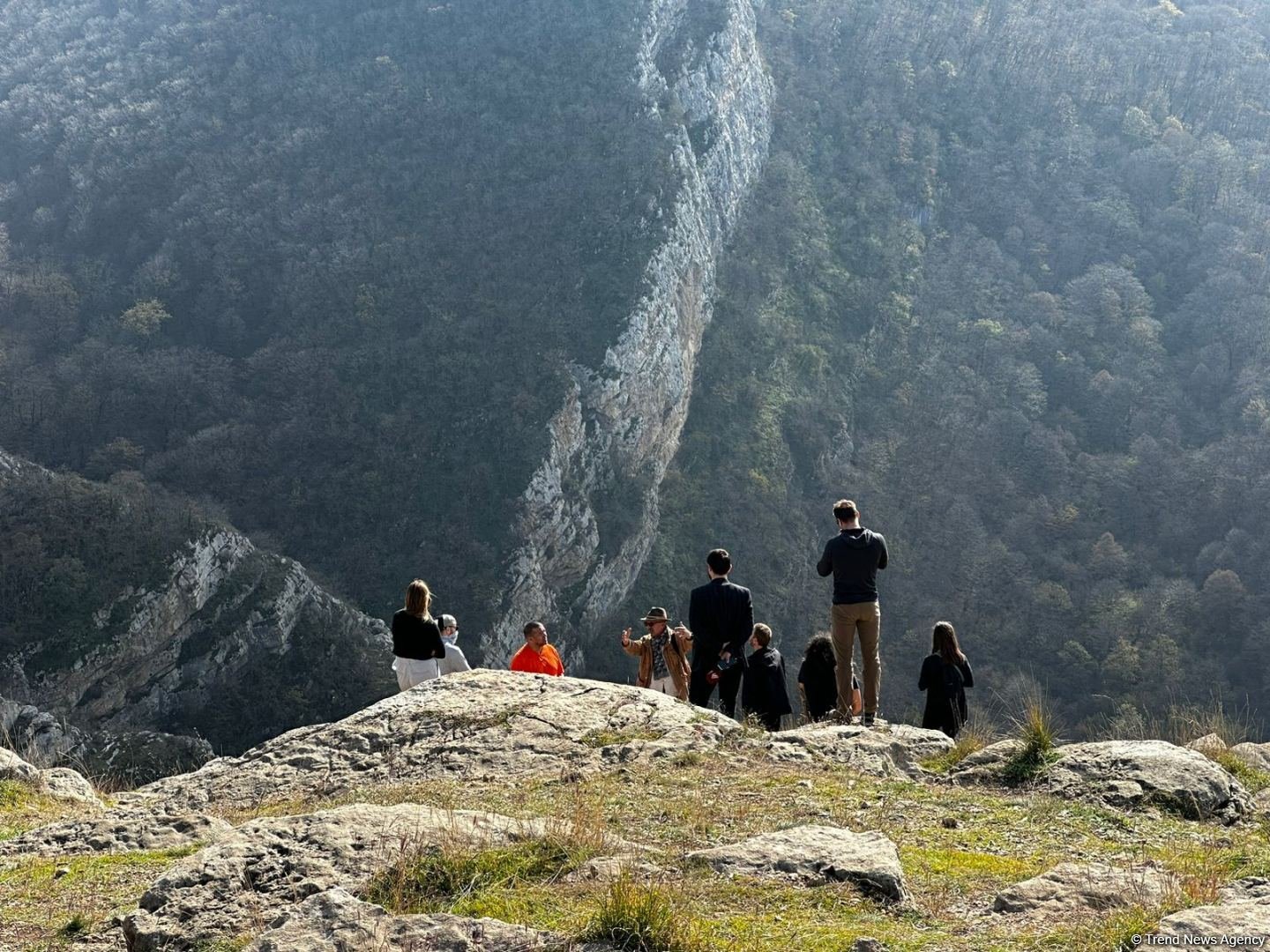
Cıdır Düzü (Jidir Plain): A must-visit plateau located at the very edge of the city. Historically a vibrant venue for horse racing and traditional Novruz celebrations, it offers a jaw-dropping, vertigo-inducing panoramic view over the Dashalty Gorge and the winding Qarqar River hundreds of meters below.
Yukhari Govhar Agha Mosque: With its striking twin minarets and intricate brickwork, this 18th-century mosque stands proudly in the main square. Though no longer used for daily prayers, it has been brilliantly renovated and stands as a magnificent symbol of Karabakh's Islamic architectural heritage.
Vagif Mausoleum: This striking, geometric monument is dedicated to Molla Panah Vagif, a revered 18th-century poet and statesman. Heavily damaged during the conflicts of the 1990s, the mausoleum was completely restored in 2021 and shines brilliantly against the mountainous skyline.
Before 1993, Aghdam was a bustling, vibrant city of over 40,000 people. For nearly three decades following the First Karabakh War, it stood as a chilling ghost town, utterly destroyed and stripped bare. Today, visiting Aghdam offers one of the most sobering yet deeply hopeful experiences on your itinerary.
Driving into Aghdam is a profound exercise in contrasts. You will witness vast stretches of haunting ruins existing directly alongside fleets of cranes constructing ultra-modern, eco-friendly residential blocks, schools, and green parks.
The Juma Mosque: For years, this was the only building left standing in Aghdam, utilized partly as a navigational landmark by military forces. Today, its towering minarets have been beautifully restored. Walking through its halls is a powerful reminder of the city's endurance.
Martyrs' Alley: A somber, beautifully kept memorial that pays tribute to those who lost their lives during the regional conflicts. It grounds your travel experience, reminding visitors of the heavy, human price paid for the region's current era of peace and rebuilding.
While Shusha provides the high culture and Aghdam the poignant history, the central, western, and southern districts offer a fascinating look at urban reintegration and unparalleled natural beauty.
Khankendi and Khojaly: Located just a short drive from Shusha, Khankendi is seeing rapid urban revitalization. The newly established Karabakh University brings a youthful, academic energy to the town, while wide boulevards are being prepped for new businesses. Nearby, Khojaly a site of immense historical tragedy now stands as a place of quiet reflection and ongoing reconstruction.
Lachin and the Hakari River: The Lachin corridor weaves through spectacular, winding alpine scenery. The city itself is currently developing seven new parks and a massive recreational center along the Hakari River. Travelers should make a point to visit the Yurd Gallery and the Gilabi Ceramics Center to purchase traditional handicrafts and support returning local artisans.
Kalbajar’s Thermal Springs: Located deep in the high mountains, Kalbajar is famous for its Istisu mineral springs. The region is actively being developed into a premier balneological and health resort destination. Though the luxury infrastructure is still catching up, the raw, untouched alpine beauty and therapeutic waters are absolutely staggering.
Traveling to a post-conflict zone requires a specific mindset and strict adherence to safety protocols. Azerbaijan has poured immense resources into demining the liberated territories, but the work is not fully complete.
The Golden Rule: You must never, under any circumstances, venture off the paved roads, marked paths, or actively populated areas. Demining operations are still ongoing in rural and forested areas. The districts approved on the portal are cleared and completely safe for tourists, but exploring random fields, unmarked trails, or abandoned, overgrown structures is strictly forbidden and highly dangerous.
Furthermore, practice respectful photography. Avoid photographing active military installations or checkpoints, and remember that you are walking through a region where almost every local you meet has a deep, personal connection to the history of the land. Approach conversations with empathy and a willingness to listen.
The crisp, high-altitude mountain air of Karabakh does wonders for the appetite, and the regional cuisine is robust, comforting, and incredibly flavorful.
Karabakh Kata: A traditional, utterly addictive sweet pastry stuffed with a buttery, crumbly, sugary filling. Shusha is famous for its massive, richly flavored version of the kata perfect when paired with strong Azerbaijani black tea.
Kebab and Saj: The region is historically renowned for its pristine livestock. Be sure to stop at one of the newly opened roadside eateries for some incredibly tender lamb kebab or a Saj (a traditional dish of meat and fresh vegetables cooked on a convex iron griddle over an open wood fire).
Karabakh is not your typical, perfectly polished tourist destination it is a living, breathing history lesson unfolding in real-time before your eyes. It is a destination that caters to the traveler seeking authenticity, raw landscapes, and a front-row seat to one of the most ambitious rebuilding projects of the 21st century.
While the luxury hotel scene is just beginning to sprout (with properties like the five-star Qarabağ Zəfər hotel complex leading the charge), the true luxury here is the access itself. It is the distinct privilege of walking through a land that has been reclaimed from the shadows of conflict and is boldly stepping into the light. When you visit Karabakh, you aren’t just a tourist crossing locations off a map; you are a witness to a historic reconstruction, sharing the joy of a region that is finally welcoming the world back to its mountains.